
For generations, the arrival of the monsoon in Nepal has symbolized hope. In a country where agriculture remains central to livelihoods and the economy, rainfall brings life to fields, replenishes water sources, and supports millions of people. Yet lately, I often find myself wondering whether we spend more time discussing its promise or preparing for its consequences.
I still remember the 23rd of May 2026, reading a heat wave alert for the western plains issued by DHM and an advisory from NDRRMA, while at the same time assessing the impact of a landslide in Panchthar district in the eastern hills triggered by heavy overnight rain. It struck me that Nepal was facing two very different realities at once. These risks are no longer arriving one after another; increasingly, they overlap.
As an Information Management Officer supporting humanitarian coordination efforts in Nepal, I have seen firsthand how climate change is reshaping our risk landscape. A monsoon season can now be smaller in scale overall yet produce highly concentrated rainfall in specific pockets. Heat waves are becoming more frequent and prolonged. Hazards that once occurred separately are now interacting making preparedness and response far more complex.
This is rapidly becoming our new normal.
In this environment, humanitarian information management matters more than ever. When emergencies unfold, information is not simply data, it is what enables action: knowing who is at risk, where impacts are likely and what capacities exist on the ground.
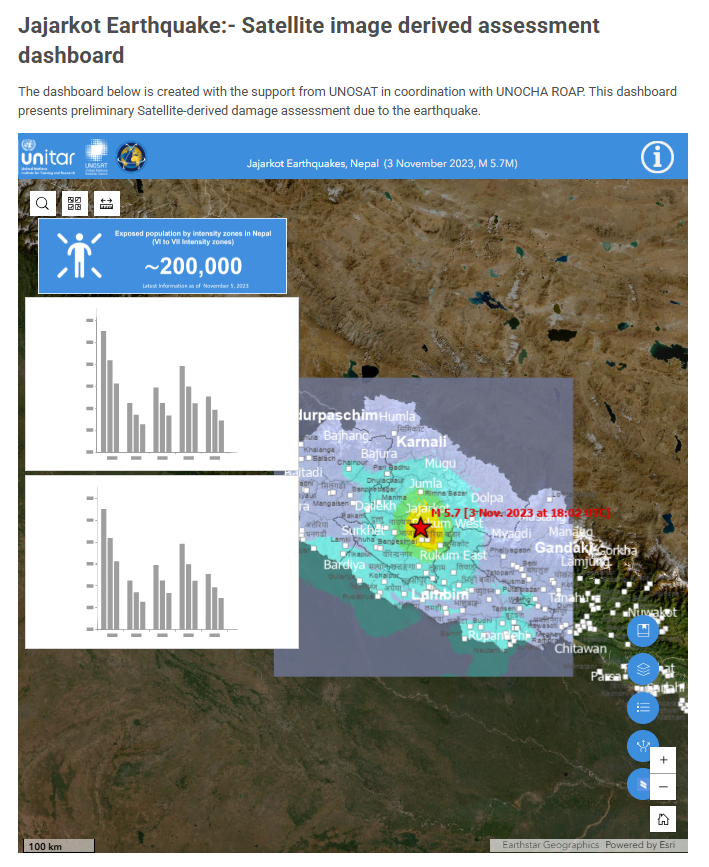 Behind every situation update, dashboard, risk analysis and coordination meeting lies the work of collecting, verifying, and turning information into actionable insights thathelps governments, humanitarian partners, and communities make informed decisions under pressure.
But information alone cannot save lives.
When multiple hazards overlap, coordination becomes the foundation for effective action. No single agency, ministry, or institution holds the complete picture. This is why the coordination role of the United Nations Resident Coordinator's Office (RCO working with the Humanitarian Country Team (HCT), government counterparts, and technical partners, matter.
It creates a shared understanding of risk and lets many actors move in the same direction, with one purpose, protecting people before a crisis escalates.
This shift toward acting before disasters happen is at the heart of anticipatory action. The question is no longer whether hazards will occur, but how early can we identify risks and reduce their impact.
Innovation helps strengthen this work. Through initiatives such as the SAJAG project, scientific research and hazard modelling are being translated into practical tools people can actually use: sharper risk analysis, more targeted preparedness, and earlier warnings that reach communities in time to act.
What all of this coordination, information management, innovation, and anticipatory action ultimately serve is a human purpose.
Success is not measured solely by how effectively we respond after a disaster strike but by the losses we help prevent.
It is a farmer who protects a harvest before heavy rainfall arrives. A health facility that remains functional during a heat wave. A child who continues attending school despite a challenging monsoon season. A family that avoids losing years of progress because support arrives early enough.
Climate change is presenting Nepal with new and complex challenges, but it is also driving new collaboration, governments, humanitarian organizations, researchers and communities working together to understand risk and prepare for it.
That gives me hope. Building resilience is not a responsibility for humanitarian actors alone; it takes all of us, sharing knowledge and investing in preparedness before disasters strike.
Whether by strengthening early warning systems, supporting evidence-based decision-making, contributing local knowledge, or promoting climate resilience in our own communities, each of us has a role to play.
What keeps me motivated is seeing how coordination translates into real outcomes. A dashboard, a risk map, or a forecast may seem technical on the surface, but behind every data point is a community, a family, or a farmer hoping for a safer season.
The monsoon will always remain a source of prosperity for Nepal. Our task is not to fear it, but to better understand and manage the risks now accompany it.
As climate risks become more complex and interconnected, our collective ability to anticipate, coordinate, and act early will determine how well Nepal adapts to the future.
The time to act is not when a river overflows or a heat wave peak, it is now. By working together today, we can help ensure that tomorrow's monsoon remains a source of prosperity, not vulnerability, for the people of Nepal.
Ragindra Raj Bhandari
Information Management Officer
UN Resident Coordinator Office, Nepal