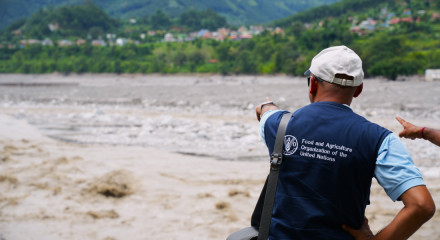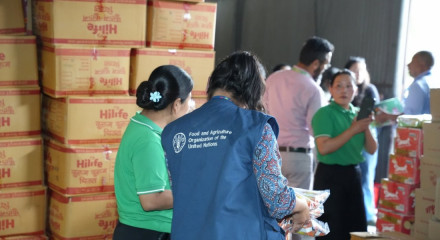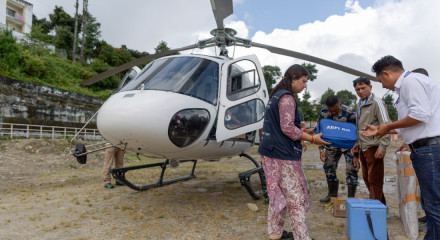

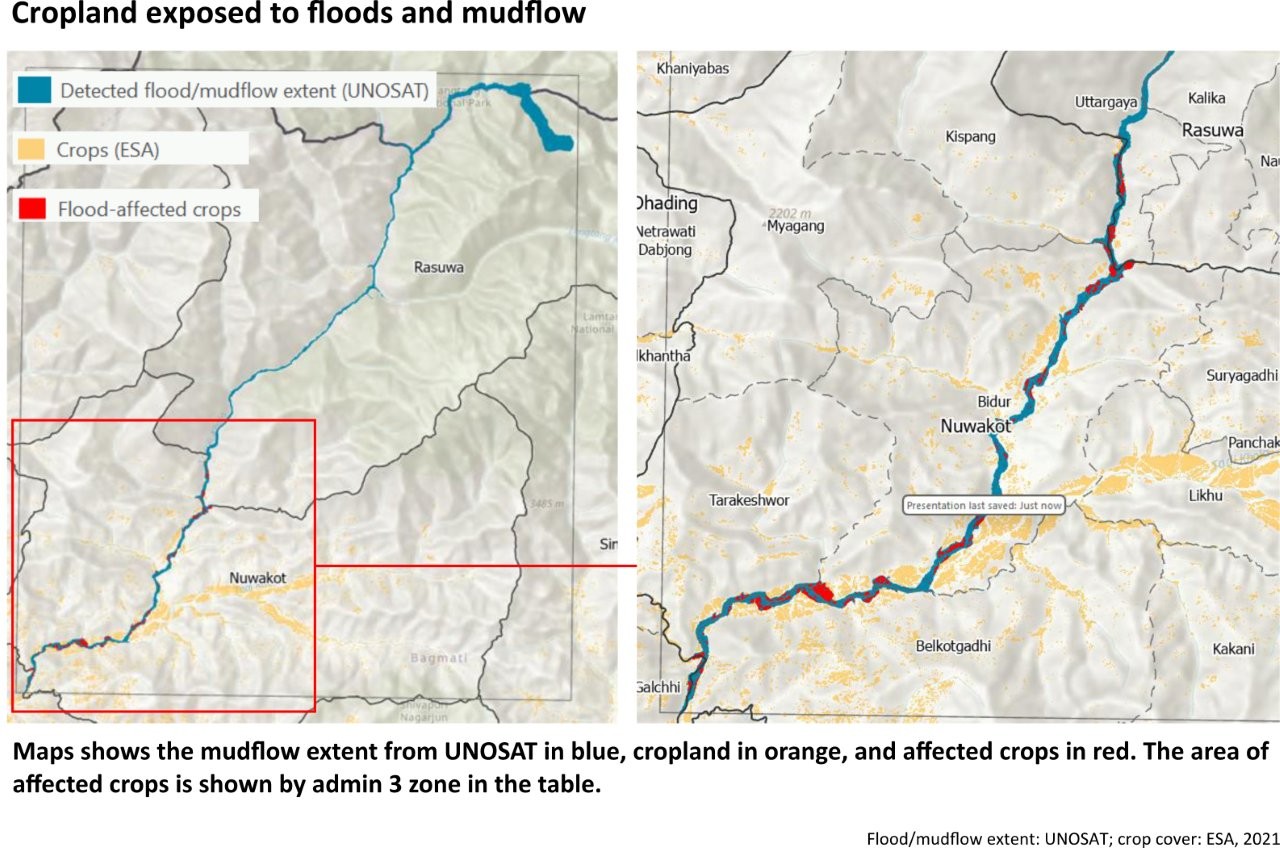
 When devastating floods swept through the Bhote Koshi watershed in late August 2026, immediate relief was only one part of the response. Understanding the full extent of the damage is equally critical for guiding recovery efforts. At the request of the Government of Nepal, FAO Nepal mobilized technical expertise to support agricultural loss and damage assessment, combining satellite imagery, geospatial analysis, field information, and sectoral data to help build an evidence base for decision-making. The work complements ongoing humanitarian efforts while providing authorities with a clearer picture of the disaster's impact on farming communities.
As Co-Lead of the Food Security Cluster alongside WFP Nepal, FAO Nepal is working closely with the Government of Nepal, development agencies, and Food Security Cluster partners, in close coordination with the Ministry of Agriculture, Forests and Environment (MoAFE), the National Disaster Risk Reduction and Management Authority (NDRRMA), and local governments, to ensure food security and the resilient restoration of livelihoods and public services. FAO provides technical support to assess damage to crops, livestock, agricultural infrastructure, and rural livelihoods. The assessment process helps identify affected agricultural areas and informed discussions on priority needs, recovery measures, and resource requirements. By strengthening the quality and availability of information, the initiative supports government efforts to plan a more targeted and effective response for affected communities.
Beyond documenting losses, the assessment lays out the foundation for recovery planning aimed at restoring agricultural production and helping farming families rebuild their livelihoods. The evidence generated is expected to guide future interventions in areas such as crop restoration, livestock recovery, rehabilitation of agricultural infrastructure, and other measures needed to support community resilience. As recovery efforts continue, FAO remains committed to working alongside the Government of Nepal and partners to ensure that technical analysis translates into practical support for the people most affected by the disaster
Recognizing that poor and marginalized households, women, persons with disabilities, and other vulnerable groups are often disproportionately affected by disasters, there is an urgent need to understand how the floods have impacted food security and livelihoods. To address this need, FAO and MoALD are conducting a rapid food security and livelihoods assessment to document household needs, agricultural losses, and livelihood disruptions. The findings will help guide targeted response measures, inform early recovery interventions, and support the restoration of livelihoods for the most vulnerable communities.