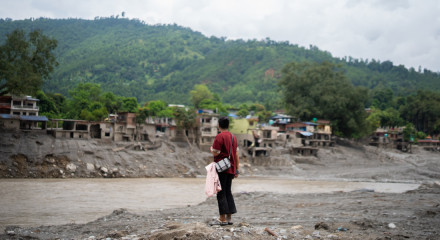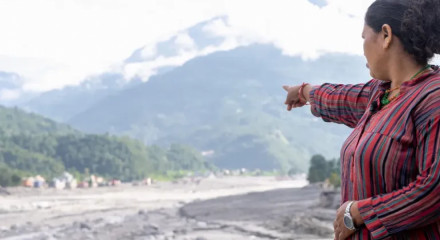

In the temporary holding centres of Rasuwa and Nuwakot, families affected by the August 2026 floods are beginning the difficult process of rebuilding their lives far from home.
Among them are pregnant women preparing to give birth, mothers caring for newborns, older people managing chronic illnesses, and individuals recovering from injuries—each carrying the emotional weight of loss, displacement and an uncertain future.
Their experiences reflect the wider health needs that emerge in the aftermath of a disaster, when displacement, damaged infrastructure and disrupted services can limit access to care. Without timely intervention, these disruptions can quickly lead to secondary health crises, from preventable maternal and neonatal complications to disease outbreaks.
To help address these needs, WHO is working closely with the Government of Nepal and partners to strengthen health sector response planning and implementation, coordinate support across the affected areas, assess the functionality of health facilities, and support the continuity of essential and lifesaving services for people affected by the floods.
In areas where primary health centers have been damaged, WHO is in the process of setting up temporary facilities using Medical Camp Kits to help ensure that essential health-care services continue without interruption.
As the response transitions from immediate relief to long-term recovery, sustaining these efforts will be critical to addressing the longer-term health consequences of the floods.
WHO is strengthening disease surveillance systems so that potential outbreaks can be identified and addressed as early as possible. Essential diagnostic kits, medical equipment, and critical supplies—including community water filters—are being delivered directly to frontline health facilities and response teams.
WHO is also providing assistance in identifying and reaching people who may face greater challenges in accessing care, including those living with tuberculosis, HIV, chronic illnesses or disabilities. These efforts aim to ensure that people can continue receiving essential treatment and have timely access to assistive devices. To support mental health recovery in affected communities, WHO is also providing technical guidance and establishing standards for psychosocial counselors working on the ground.
"Where do I go now? Where will I stay?"
/countries/nepal/picture13c0e97ca-6659-4af9-aa8b-3b834ae8d1ef.jpg?sfvrsn=19e94871_6 "Surya Maya Ghale, 39, seven months pregnant, living a holding centre in Betrawati, Rasuwa, following the devastating Bhotekoshi floods in Nepal")
Seven months pregnant, Surya Maya Ghale, 39, is living in a holding centre in Betrawati, Rasuwa, after the August floods destroyed her home and killed seven members of her family.
Seven months pregnant and grieving the loss of seven family members, Surya Maya Ghale is living in a holding centre in Betrawati after the flash floods destroyed her home near the Rasuwa-Nuwakot border. The 39-year-old is preparing for childbirth while facing an uncertain future, asking where she will go and where she will stay. For women like Surya Maya, continuity of antenatal care and access to safe delivery services are especially important during displacement. Emotional support is also critical for those coping with bereavement and the upheaval of losing their homes.
"My focus now is keeping my daughter safe."
/countries/nepal/picture208a74c87-ca6a-43b9-8b2a-40203dfc0651.jpg?sfvrsn=d79ce686_3 "Picture2")
Fulmaya Tamang, 23, cares for her two-month-old daughter at a holding centre in Laharepauwa, Rasuwa, where the family has been staying since floods damaged their home in Shanti Bazar, Nuwakot.
Fulmaya Tamang's world has narrowed to one immediate priority: keeping her two-month-old daughter safe. Only weeks into motherhood, the 23-year-old found herself living at the Laharepauwa holding centre in Rasuwa after flood damage made the family's home in Shanti Bazar, Nuwakot, unsafe. Caring for an infant in unfamiliar surroundings presents daily challenges, but Fulmaya remains focused on her daughter’s well-being while waiting for conditions to become more stable.
For families with newborns, familiar routines can be difficult to maintain in temporary accommodation. Breastfeeding support, routine newborn care and timely referral when a child becomes unwell can all help protect mothers and babies during this vulnerable period.
"I worry whether I will be able to get more medication once my current supply runs out."
/countries/nepal/picture34685f042-dc6b-4411-9ffe-fbf749c3fe87.jpg?sfvrsn=c52020e9_3 "Picture3")
Shaili Dangol, 70, is staying at a holding centre in Nuwakot after flash floods forced her to leave her home in Rasuwa. She lives with high blood pressure and diabetes, and depends on regular medication.
Shaili Dangol, 70, lives with high blood pressure and diabetes and depends on regular medicines to manage both conditions. Now staying at a holding centre in Nuwakot after losing her home in the floods, she is concerned about finding more medication once her current supply runs out. For people with chronic conditions, maintaining treatment during a disaster can be as important as responding to new injuries or illnesses. Interruptions to medicines and follow-up care can quickly put otherwise manageable conditions at risk.
"I survived the flood, but recovering from my injury is another struggle."
/countries/nepal/picture4f022bcdf-ffd6-405d-9141-b7071117307c.jpg?sfvrsn=31ab9ffd_3 "Picture4")
Bhagwati Thapa, 42, is recovering from a fractured leg at a temporary holding centre in Nuwakot after being injured while fleeing the floods in Rasuwa. She lost her home in the disaster.
Bhagwati Thapa survived the flood, but the injury she sustained while escaping continues to shape her daily life.
The 42-year-old fractured her leg while fleeing the disaster in Rasuwa and lost her home. She is now staying with her family at a temporary holding centre in Nuwakot as she begins the longer process of recovery.
Her experience highlights a part of emergency healthcare that can easily be overlooked once the immediate crisis has passed. Rehabilitation, physiotherapy, mobility assistance and follow-up care can make the difference between a temporary injury and a lasting disability.