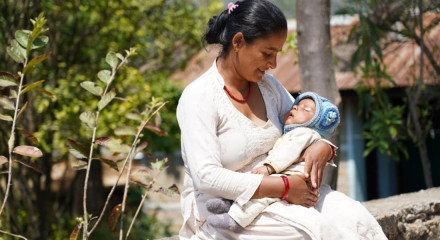

Just before midnight on 3 November 2023, the ground beneath Nepal’s Karnali Province was shaken by the 6.4-magnitude earthquake that struck Jajarkot and Rukum West. It was the country’s deadliest since 2015, claiming more than 150 lives, damaging over 62,000 homes, and directly affecting more than 250,000 people (NDRRMA, 2023). Then came the floods. Months later, flash floods tore through the same hillsides, sweeping away irrigation canals, farmland, and homes a reminder that in Nepal, disasters rarely arrive one at a time. What was at stake was not only lives and property but something harder to see: years of development progress that a single season can undo.
In Ranikhet, a village in Nalgad Municipality, the loss could be measured in a single piece of infrastructure. An unassuming irrigation canal did triple duty there: it watered the fields, drove an 11-kilowatt micro-hydropower plant, and turned two traditional water mills. When critical sections were destroyed, the consequences cascaded. Farms dried up. The electricity went out. Families walked long distances carrying grain to be milled, and returned to villages that sat in darkness for months.
“This canal is the heart of our community,” recalls Bhim Bahadur Oli, a local farmer. “When it was washed away by floods, milling, electricity, and daily life was affected. Restoring it has helped us recover in so many ways.”
The pattern repeated in Bhalma Sota, in Aathbiskot Municipality, where a canal irrigated some 10 hectares of farmland and served 82 households. Villagers patched it again and again; the steep, unstable terrain undid every repair. Slowly the crops withered and the fields turned barren, the kind of quiet unravelling that never makes headlines but hollows out a community all the same.
For Rabi Babal Magar, a mother raising two children while her husband works abroad, the canal was a lifeline — all the more so after the earthquake damaged her home. “When the canal was damaged at a critical point on the steep hills, I often had to depend on others to bring water to my fields,” she says. “Sometimes no one could help me, and my crops dried up. Now I feel confident that I can irrigate my fields without depending on anyone.”
In Kafalchaur, a third restored canal has brought life back to 47 households. Water runs again through once-barren fields, and the mills it powers grind grain and press mustard oil for villages well beyond its banks. Kali Bahadur Malla, who runs one of those oil mills, says the restored system has revived his family’s livelihood and spared his neighbours the long, expensive journey to distant mills.
There is a larger argument embedded in these small victories: recovery, done well, is not merely restoration. Women worked on the crews that rebuilt the canals protecting gains in gender equality, strengthening community ownership, and quietly unsettling old assumptions about who builds what in the hills of Karnali.
The mechanics of this recovery matter. Through the Jajarkot Earthquake Recovery Project, funded by the Government of Japan and implemented by UNDP Nepal in collaboration with UN-Habitat Nepal, UN agencies working as one, in support of the Government of Nepal-led response, 45 critical facilities were restored: 25 irrigation systems re-engineered with reinforced retaining walls and flood-resilient designs, along with 10 government service buildings, 5 market centres, and 5 community facility centres. Paired with livelihood and life-skills training, the approach reflects a humanitarian–development nexus logic: build back not what was, but what can withstand what comes next.
What has been restored, beyond the infrastructure, is harder to quantify- hope, dignity, the confidence to plant again. The harder question is one of scale. Each monsoon brings fresh floods and landslides to Karnali’s hillsides, and resilient infrastructure remains the exception rather than the rule. Yet the water flowing through Ranikhet, Bhalma Sota, and Kafalchaur suggests a possibility worth taking seriously: if one of Nepal’s most remote provinces can emerge from disaster stronger than before, resilient recovery should become a norm.
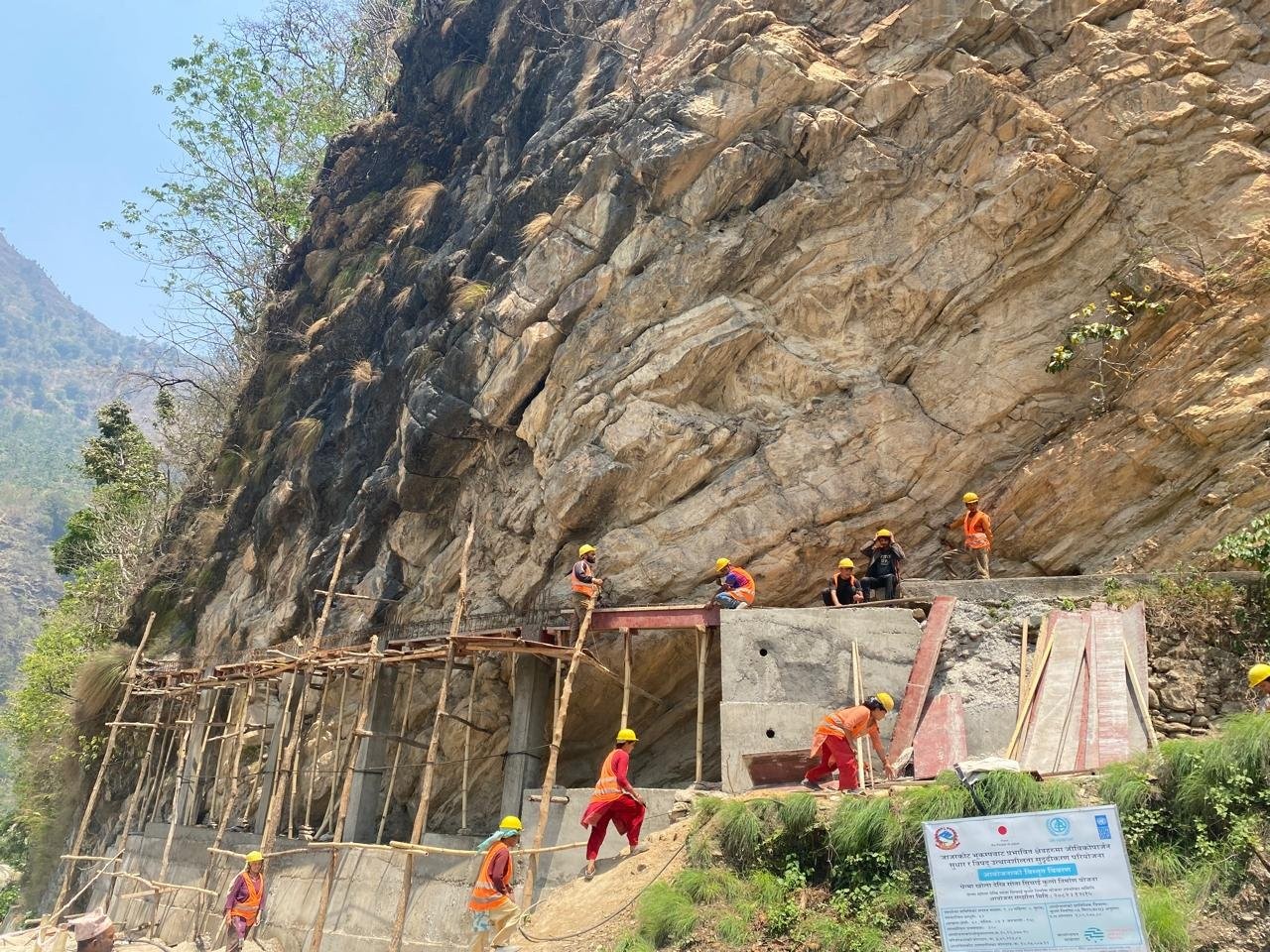
Local workers are building a retaining wall for the Bhalmasota Irrigation Canal in Aathbiskot-13, Rukum West. © UN-Habitat Nepal
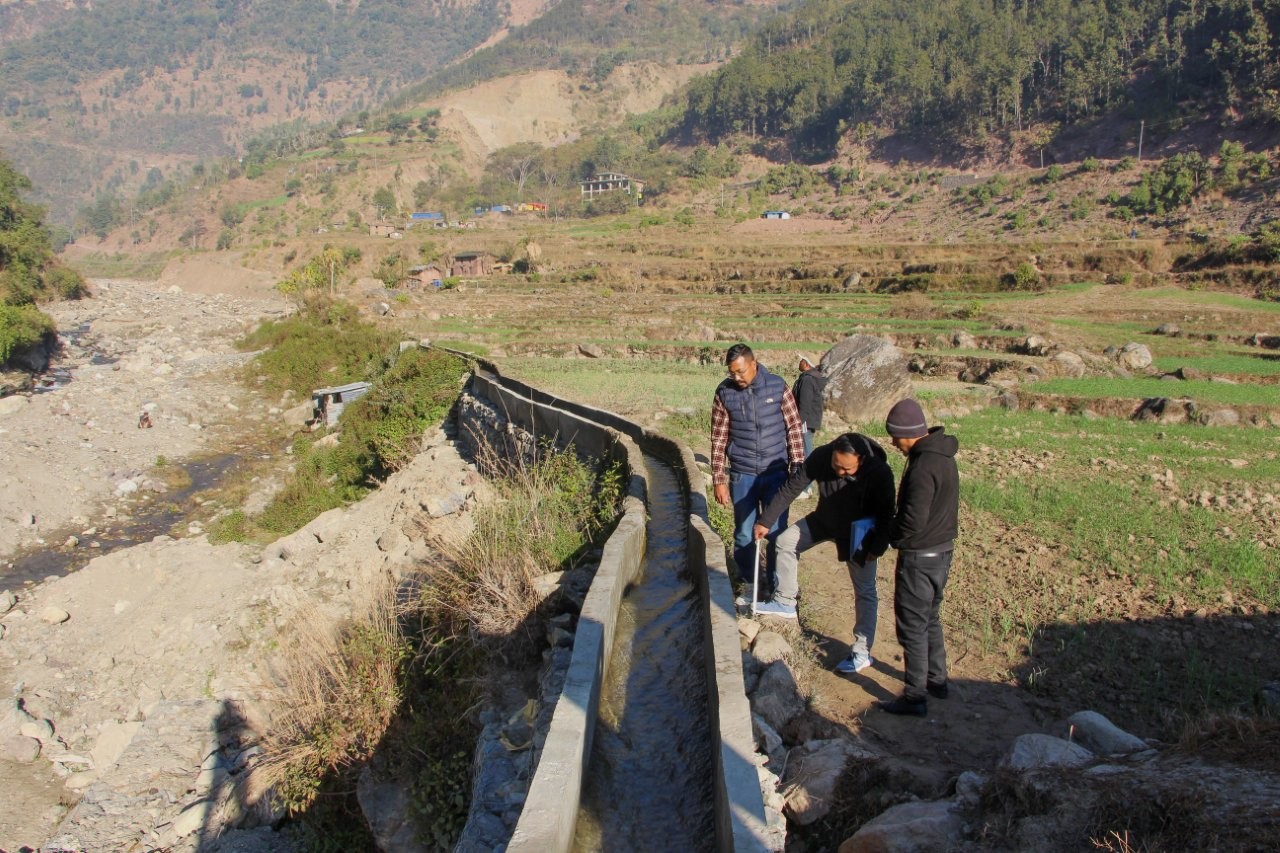
Engineers conducting a post-construction assessment of Ranikhet irrigation canal, Nalgad-5, Jajarkot, to verify infrastructure standards. ©UN-Habitat Nepal
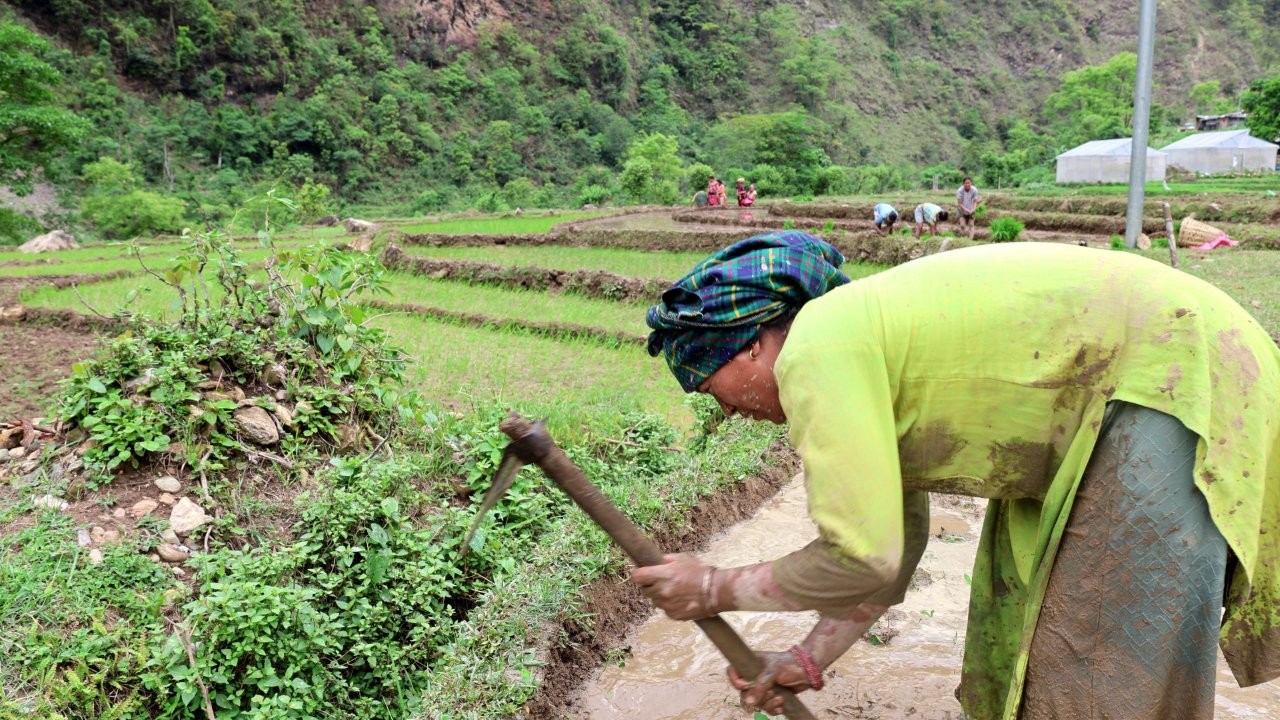
Rabi Babal Magar is busy preparing the field for rice planting © UN-Habitat Nepal/Hari Jang Thapa