

 High in the Himalaya, the rivers begin as snowmelt and monsoon rain, then run south through Nepal's hills and across the plains into India, carrying water, silt and risk together. When a glacial lake bursts or a monsoon swells beyond forecast, the flood does not pause at the border. Neither do the stories about it.
“We always only wrote news about the problem,” said Kathmandu-based investigative journalist Kalpana Bhattarai. “But we realized we can also incorporate a solution to the problem.”
That is the shift Bhattarai describes, and it is spreading through Nepal's environmental journalism: away from reactive disaster coverage, toward risk-informed, solutions-oriented reporting that helps people prepare. The stakes are written into the landscape. Nepal lives with recurring floods, landslides and glacial lake outburst risks, and the 2024 monsoon floods and landslides showed how quickly one season can unravel communities and reverse development gains.
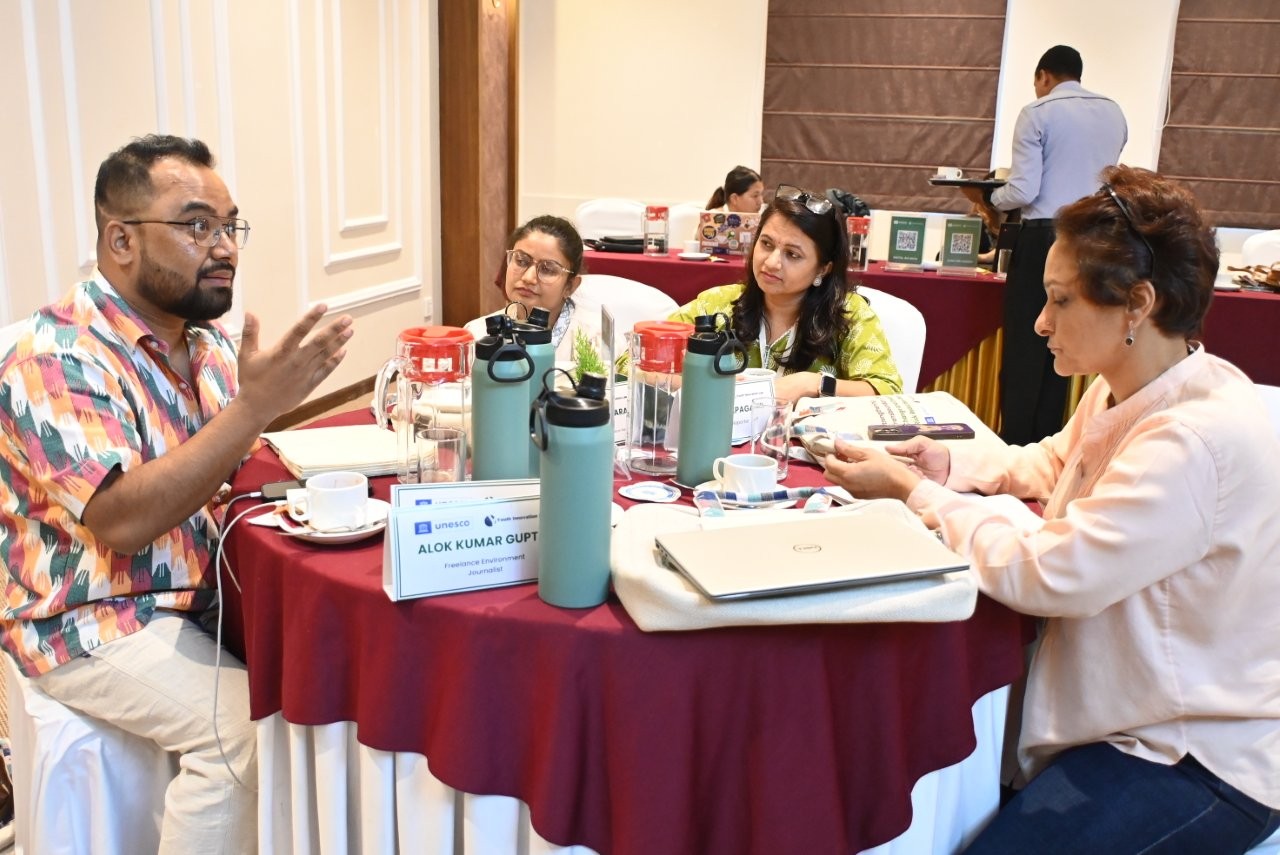
Nature connects what maps divide. Rivers, ecosystems and settlements across Nepal and India form one living system, so a hazard upstream becomes a crisis downstream. Reporting, however, has usually stopped at the border. To change that, UNESCO supported an initiative bringing together journalists from both countries to trace shared risks the way the water travels, across boundaries, reporting on risk drivers, early warning gaps, governance and solutions.
The stories followed the rivers. Five cross-border reports were published through national and regional outlets, covering glacial lake risks, Himalayan climate impacts, disaster governance and early warning systems, carrying evidence-based, community-focused perspectives to readers on both sides of the border.
The work is now growing roots. Moving from individual journalists to whole institutions, UNESCO is coaching newsrooms across Nepal on climate and disaster risk reporting, emergency readiness and preparedness planning, helping each one review its emergency practices and develop its own response plan.
It is a quietly ecological idea: resilience lives in connection. A newsroom that stays on air during a flood belongs to the same protective web as a river gauge upstream or a trained volunteer in a ward office. When newsrooms are ready, communities receive timely, accurate information before, during and after disasters, and that information protects what years of development have built.
The rivers will keep running south, and the monsoon will keep testing the people who live along them. By linking public-interest reporting with institutional readiness, UNESCO is helping Nepal's media sector reduce risks before they escalate, so that better-informed communities and hard-won development gains endure season after season.